

Freelancing has become an increasingly accessible way for professionals to earn income by offering their skills and services to clients around the world. However, finding freelance work is not simply about applying to as many projects as possible.
The most valuable freelance opportunities are usually the ones that offer a reasonable combination of income, skill development, reliable clients, and potential for longer-term work.
Whether you are starting your freelance career or looking for better projects, understanding where to search and how to evaluate opportunities can help you spend less time chasing unsuitable work and more time building a sustainable freelance business.
In this guide, we’ll look at where to find freelance opportunities, how to identify worthwhile projects, how to position your skills, and what to consider before accepting a job.
1. Identify Skills That Businesses Need
Before searching for freelance opportunities, start by understanding what you can offer.
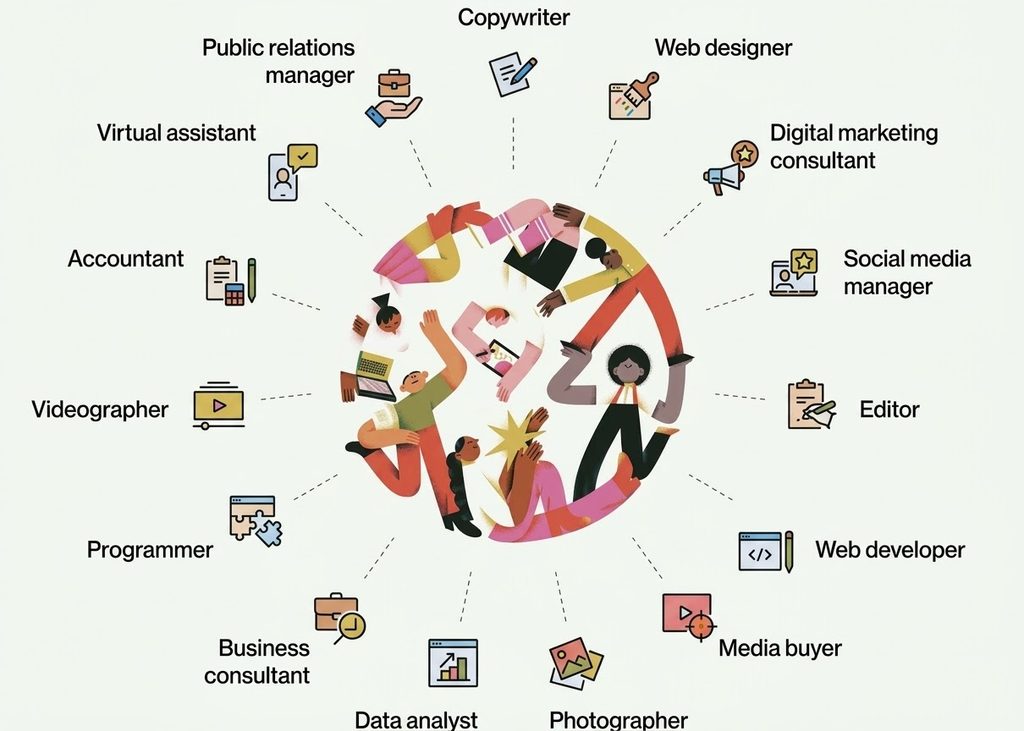
Businesses hire freelancers because they need specific skills or expertise without necessarily wanting to employ someone permanently. These needs can range from writing and graphic design to web development, virtual assistance, marketing, data analysis, video editing, and consulting.
Make a list of your strongest skills and consider which ones can be delivered as a service.
It is also useful to identify skills that businesses are increasingly using alongside technology and AI. For example, professionals who can combine their existing expertise with modern digital tools may be able to offer more valuable services than someone providing a basic task in isolation.
The goal is not to offer everything. A clear set of services makes it easier for potential clients to understand what you do and why they should hire you.
2. Look Beyond the Most Popular Freelance Platforms
Freelance marketplaces can be useful for finding clients, particularly when you are starting out. However, they are not the only source of opportunities.
Popular platforms can attract large numbers of freelancers competing for the same projects. This can make it difficult to stand out, especially when clients compare candidates primarily on price.
Consider looking beyond large marketplaces by exploring:
- Professional networking platforms
- Industry-specific communities
- Company career and contractor pages
- Online business communities
- Social media
- Personal and professional referrals
- Direct outreach to businesses
- Your existing professional network
Different channels attract different types of clients. Exploring several sources can help you discover opportunities that may have less competition.
3. Focus on Problems You can Solve
Clients are usually more interested in solving a business problem than simply purchasing a particular skill.
For example, a business may not be looking for “a writer.” It may need help producing useful website content consistently.
A company may not simply need “a virtual assistant.” It may need someone to organise appointments, manage administrative tasks, and keep customer information updated.
Thinking in terms of problems and outcomes can make your services more valuable.
When reviewing a freelance opportunity, ask:
- What problem is the client trying to solve?
- What result are they expecting?
- Can my skills realistically help them achieve that result?
- Can I explain the value of my work clearly?
The better you understand the client’s problem, the easier it becomes to position yourself as a solution rather than simply another applicant.
4. Build a Portfolio That Demonstrate Your Value
A strong portfolio can make it easier for clients to evaluate your abilities before they hire you.
Your portfolio does not necessarily need dozens of examples. A smaller collection of relevant, high-quality work can be more effective.
Choose examples that demonstrate the type of work you want to be hired for.
If you don’t have previous freelance clients, consider creating sample projects. For example, a prospective copywriter could create sample website copy, while a designer could create fictional branding projects.
Your portfolio should make three things clear:
- What you can do
- The quality of your work
- The type of client or project you can help
As you gain experience, replace weaker samples with stronger work and include relevant results or outcomes where you are able to do so.

5. Learn How to Evaluate Freelance Opportunities
Not every freelance opportunity is worth pursuing.
A project may offer attractive payment but require unrealistic deadlines, unclear responsibilities, or excessive revisions.
Before applying or accepting an opportunity, consider:
Payment: Is the compensation reasonable for the work involved?
Scope: Are the deliverables and responsibilities clearly defined?
Deadline: Is there enough time to produce quality work?
Client: Does the client appear professional and communicate clearly?
Potential: Could this project lead to repeat work or useful experience?
Fit: Does the project match your skills and the type of work you want to build your career around?
Evaluating opportunities carefully can prevent you from spending time on projects that create more problems than value.
6. Avoid Competing Only on Price
One of the easiest ways to enter a crowded freelance market is to compete by charging less than everyone else.
While lower pricing may help a beginner secure an initial project, it is difficult to build a sustainable freelance business if every client chooses you primarily because you are inexpensive.
Instead, focus on communicating the value you provide.
This can involve specialising in a particular type of service, understanding a specific industry, solving a particular business problem, or providing a more reliable and professional experience.
As your skills, portfolio, reputation, and results improve, you can gradually position yourself for higher-value opportunities.
7. Use Networking to Find Better Opportunities
Some of the best freelance opportunities may never appear on a public job board.
Businesses often find freelancers through recommendations, professional relationships, previous colleagues, industry communities, and networking.
Make networking part of your regular freelance strategy.
Share useful knowledge, participate in relevant discussions, maintain professional relationships, and let people know what services you provide.
Networking should not be treated as simply asking everyone for work. The objective is to build genuine professional relationships that can eventually lead to referrals, collaborations, and opportunities.
Your existing network can also be valuable. Former colleagues, professional contacts, and people you have worked with may already know businesses that need your skills.
8. Consider Long-Term Client Relationships
A freelance business becomes easier to manage when you don’t have to find a completely new client for every project.
A successful project can sometimes develop into recurring work.
For example, a business that hires a freelancer to create a website may later need ongoing content, maintenance, marketing, design, or administrative support.
When working with a client, look for opportunities to provide additional value without pushing unnecessary services.
Deliver reliable work, communicate clearly, meet agreed deadlines, and understand the client’s broader needs.
A satisfied client can potentially become a repeat customer or recommend you to others.
9. Improve Your Skills Continuously

The freelance market changes as technology, business needs, and client expectations evolve.
Continuously improving your skills can help you remain competitive and discover new opportunities.
Pay attention to the tools and capabilities businesses are beginning to adopt. AI, automation, data analysis, digital marketing, content creation, and other technology-driven services continue to create new possibilities for freelancers.
However, learning every new tool is not necessary.
Focus on skills that complement your existing strengths and help you solve valuable problems for clients.
A freelancer who combines strong foundational skills with the ability to use modern tools effectively can often provide more value than someone who simply follows trends.
10. Create a Consistent Opportunity-Finding System
Finding freelance work should not depend entirely on luck.
Create a simple routine for discovering and pursuing opportunities.
For example, you could:
- Check relevant freelance platforms regularly.
- Monitor professional networking opportunities.
- Contact a small number of suitable prospects each week.
- Maintain relationships with previous clients and contacts.
- Update your portfolio as you complete strong projects.
- Track applications and follow-ups.
- Review which sources produce the best opportunities.
Consistency is more useful than sending dozens of applications one day and doing nothing for the next few weeks.
A repeatable system can make your freelance search more organised and easier to improve over time.

Freelance Opportunity Checklist
Before pursuing a freelance opportunity, ask yourself:
- Does the project match my skills?
- Is the client’s problem clearly explained?
- Are the deliverables and expectations clear?
- Is the payment reasonable for the work involved?
- Is the deadline realistic?
- Does the client communicate professionally?
- Will the project strengthen my portfolio or experience?
- Could the work lead to a longer-term relationship?
- Can I deliver the required quality within the available time?
- Does this opportunity fit the type of freelance business I want to build?
If several answers raise concerns, it may be better to keep searching rather than accept every available project.
The goal is not simply to find freelance work. It is to find work that moves your freelance career in the right direction.
Wrapping Up Key Insights
Finding lucrative freelance opportunities requires more than searching job boards and submitting applications.
The strongest opportunities often come from combining valuable skills with clear positioning, a strong portfolio, professional networking, and a consistent system for finding potential clients.
Focus on the problems you can solve rather than simply listing the tasks you can perform. Evaluate opportunities carefully, avoid competing only on price, and look for relationships that can develop into repeat business.
The freelance market will continue to change as technology and business needs evolve. Keep developing relevant skills, learn how modern tools can improve your services, and remain open to new ways of finding clients.
Most importantly, build a freelance strategy around the kind of work and clients you want to attract. The objective is not to win every project. It is to build a sustainable freelance career around opportunities that provide genuine value to both you and your clients.
Leave a Reply